Vinci brings physical reasoning in full-fidelity to hardware designs—so engineers can explore, validate, and realize performance that was previously impractical, infeasible, or inconceivable.
Solver-accurate. Zero setup. Zero training. Real products. Real scale.
From simulation to physics intelligence
For decades, physics has been evaluated intermittently—through simulations run by specialists, at discrete points in the design cycle. That approach worked when systems were simpler and expert time could scale with complexity.
That world is gone.
Modern hardware concentrates more physics across more scales—dense geometry, heterogeneous materials, tightly coupled effects, and real manufacturing constraints. The limiting factor is no longer physics accuracy, but how often and how broadly it can be applied.
Vinci introduces a new paradigm: physics as an always-on intelligence layer.
Instead of running isolated simulations to check designs, engineers can continuously reason about physical behavior—at manufacturing resolution—throughout exploration, optimization, and validation.
This is not faster simulation.
It’s a fundamentally different way to design hardware.
01
Solver-accurate by construction
Results are validated against first-principles commercial FEA solvers — not proxies or surrogates
02
Zero setup, zero tuning
No meshing, defeaturing, parameter fitting, or per-case configuration — ever
03
Operates on real geometry
Native, full-resolution design files ingested end-to-end with no translation
04
Fully automated, end-to-end execution
From ingestion through convergence with no human intervention — enabling continuous, validated simulation
05
Built for production deployment
Runs behind the firewall with a single global model
Built from the ground up for accuracy, speed, and scale
This system natively integrates a physics foundation model with execution to ensure self-verifying, manufacturing-resolution accuracy without approximations. It delivers high-fidelity performance at scale.
Geometry processing
Vinci directly ingests complete, native geometry representations for dies, packages, boards, and systems.
No geometry simplification
No translation loss
No manual preprocessing
This enables accurate simulation of full designs at nanometer-scale resolution while supporting large parameter sweeps and design-of-experiments.
Multi Physics Foundation Model
Vinci’s physics foundation model provides a physics-informed inference solution that accelerates convergence without introducing approximation or nondeterminism.
The model is not probabilistic and does not hallucinate. It operates within physical constraints and feeds directly into solver-based verification.
GPU native physics kernels
The Vinci GPU native physics kernels perform automated meshing and solver-accurate convergence at production scale:
Handles hundreds of millions to trillions of degrees of freedom
Executes on one or multiple GPUs
Produces deterministic, repeatable outputs
Benchmarks against commercial FEA tools and experimental data
DATA VISUALIZATION
Simulation outputs are converted into verified, physics-consistent visual insights:
Temperature, stress, displacement, and deformation
Direct comparison across design variants
Ready for validation, reporting, and automation
Only solver-verified results are presented to engineers
Explore the Physics:
Thermal Conduction
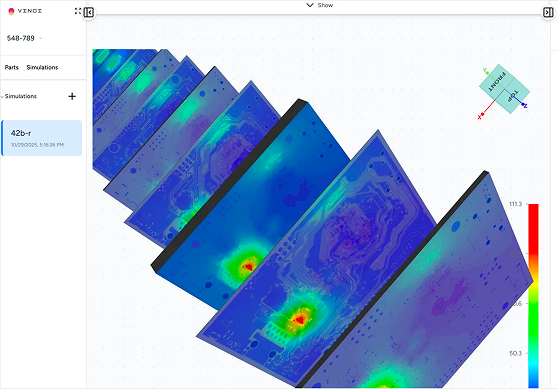
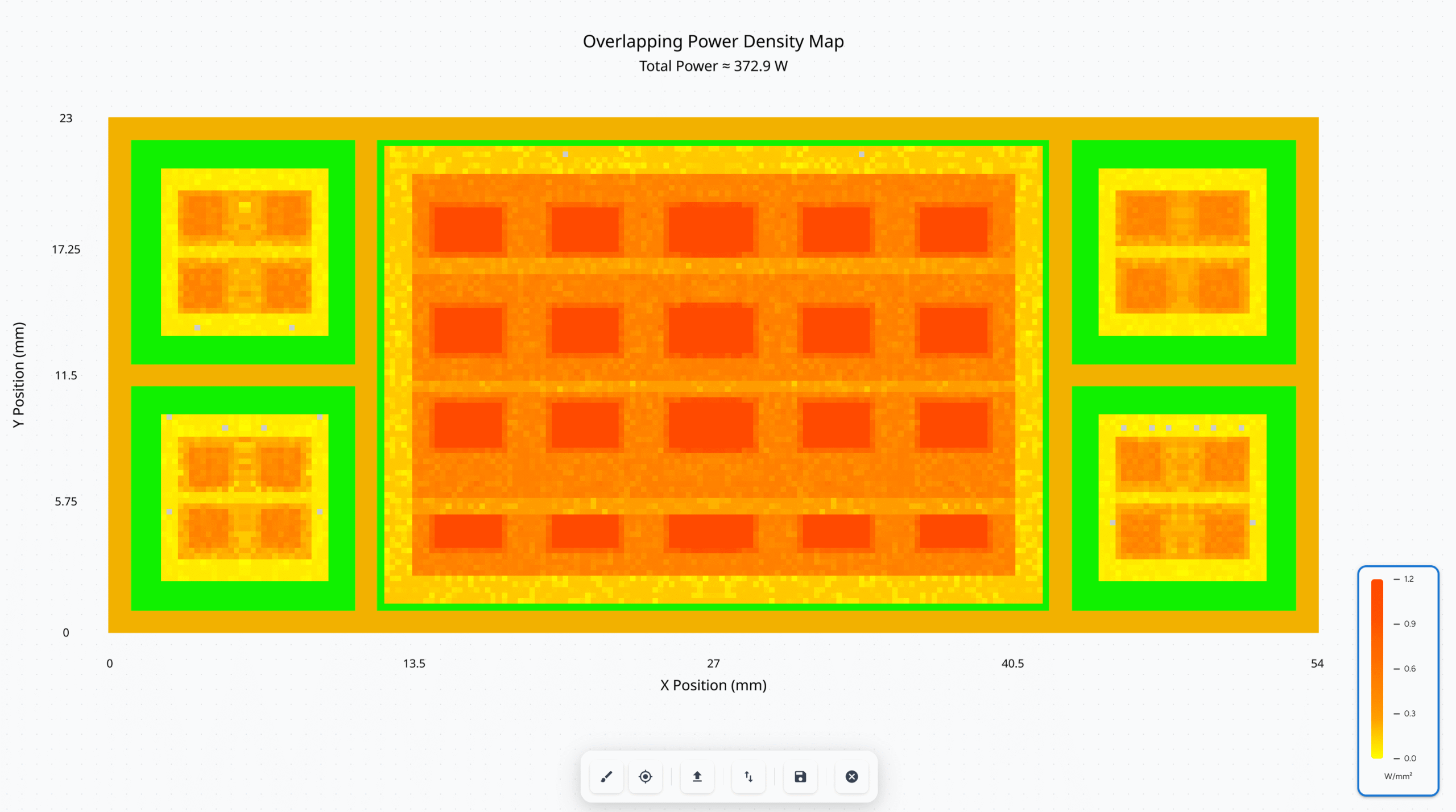
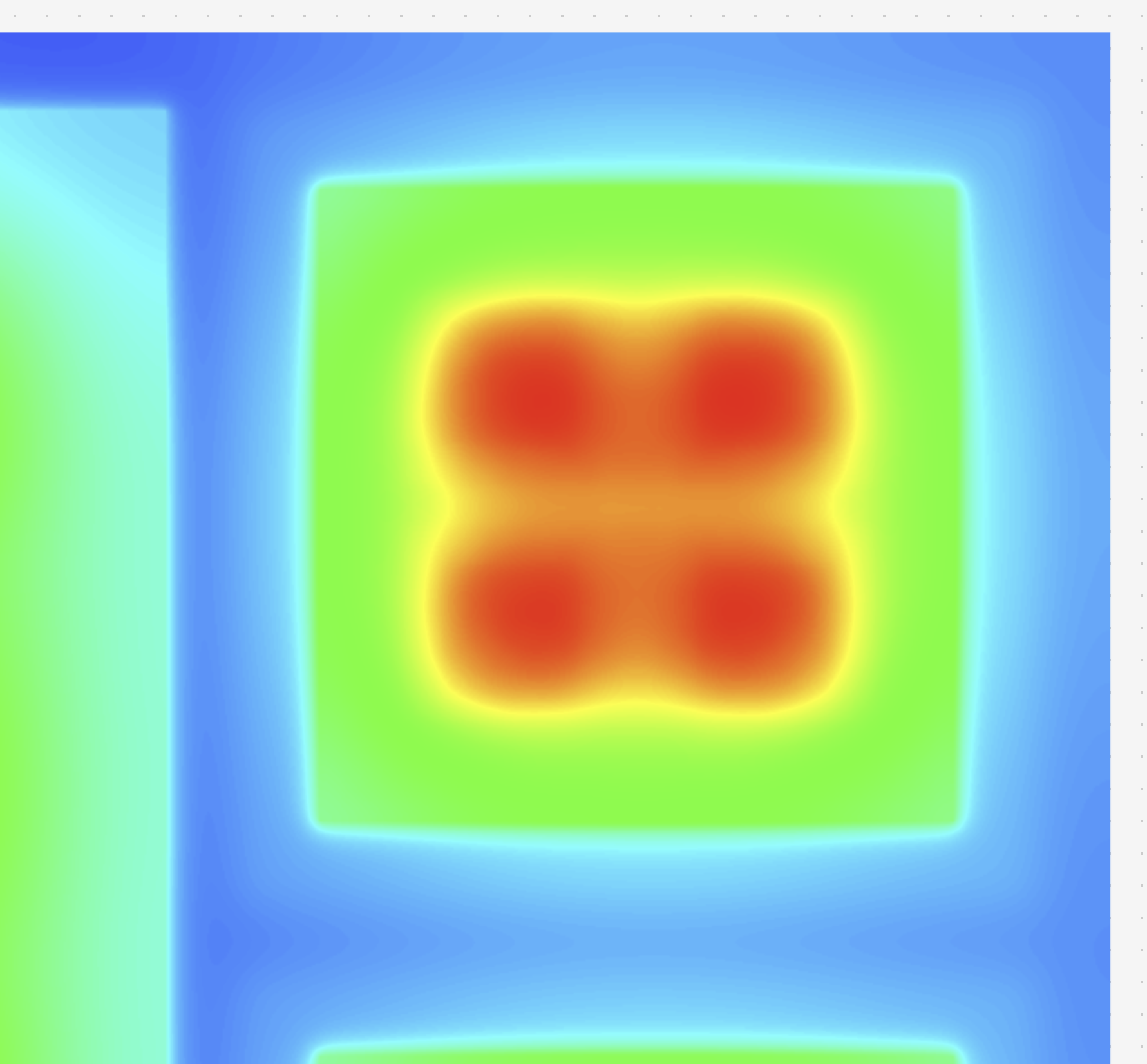
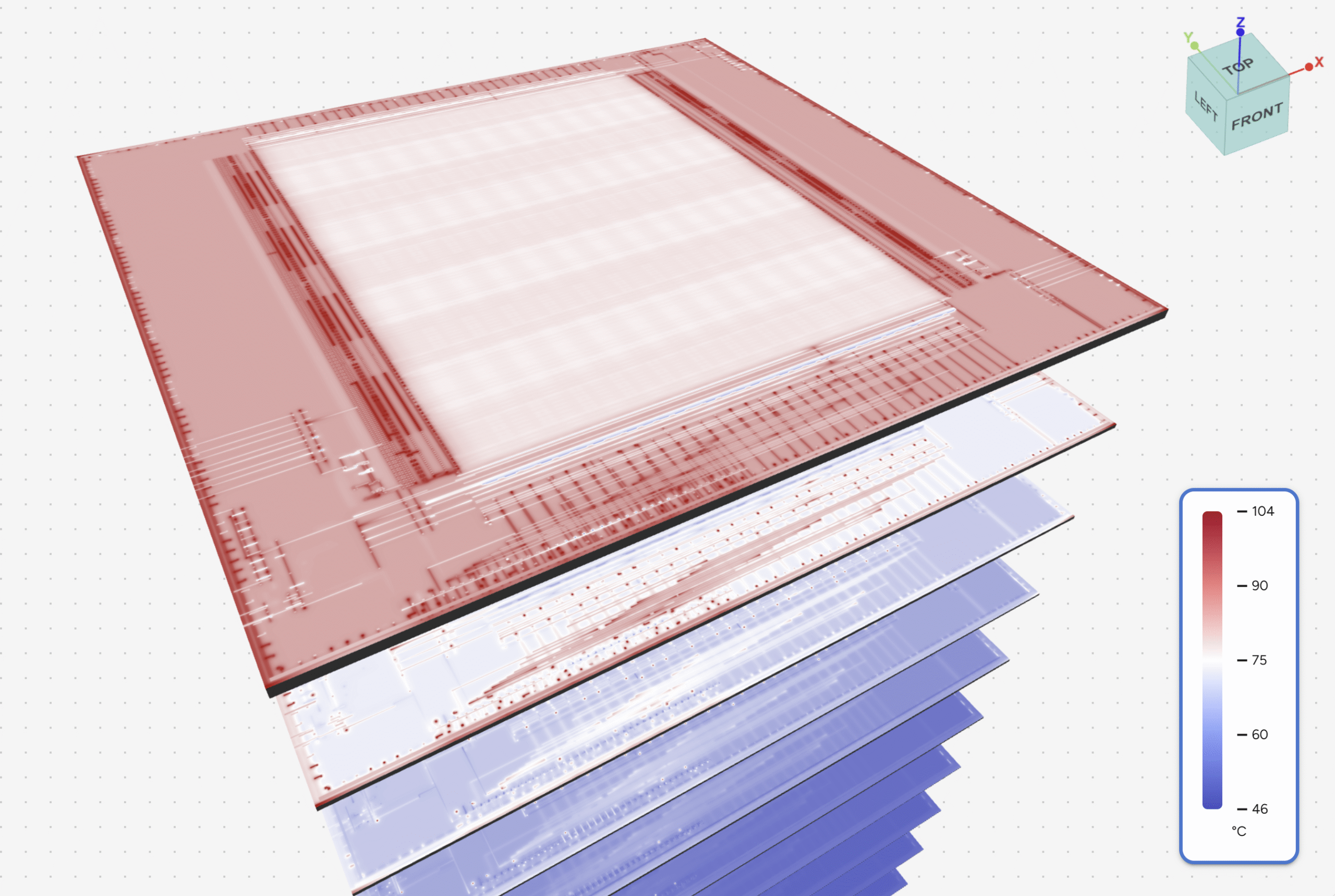
Vinci enables steady-state and transient thermal analysis on real hardware designs—at the resolution they are actually built—so engineers can reason about heat where it truly matters.
Engineers use Vinci to evaluate thermal behavior across dense, multi-material assemblies that traditionally require simplification or late-stage validation. This includes advanced packages, stacked die, high-power boards, and tightly integrated systems where local geometry and interfaces dominate heat flow.
In practice, this means teams can run manufacturing-resolution thermal analysis early and repeatedly—without collapsing designs, abstracting critical features, or limiting scope to what’s manually tractable.
Printed Circuit Board
By playing this video you accept all cookies.
Conduction Simulation on PCB
Powermap on 2.5D Package
2.5D Package Hot Spot
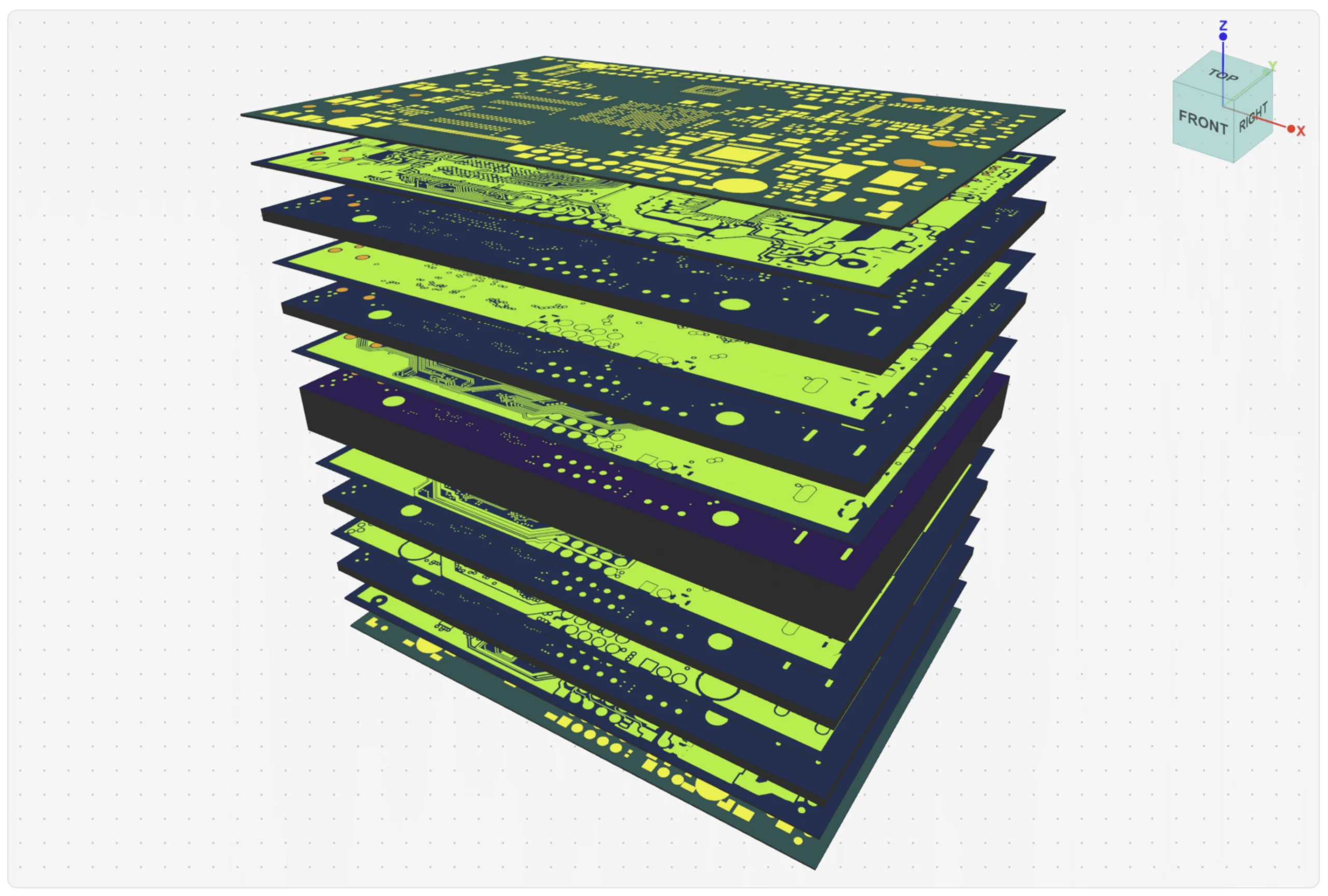
Metal & Via Layers Conduction Simulation
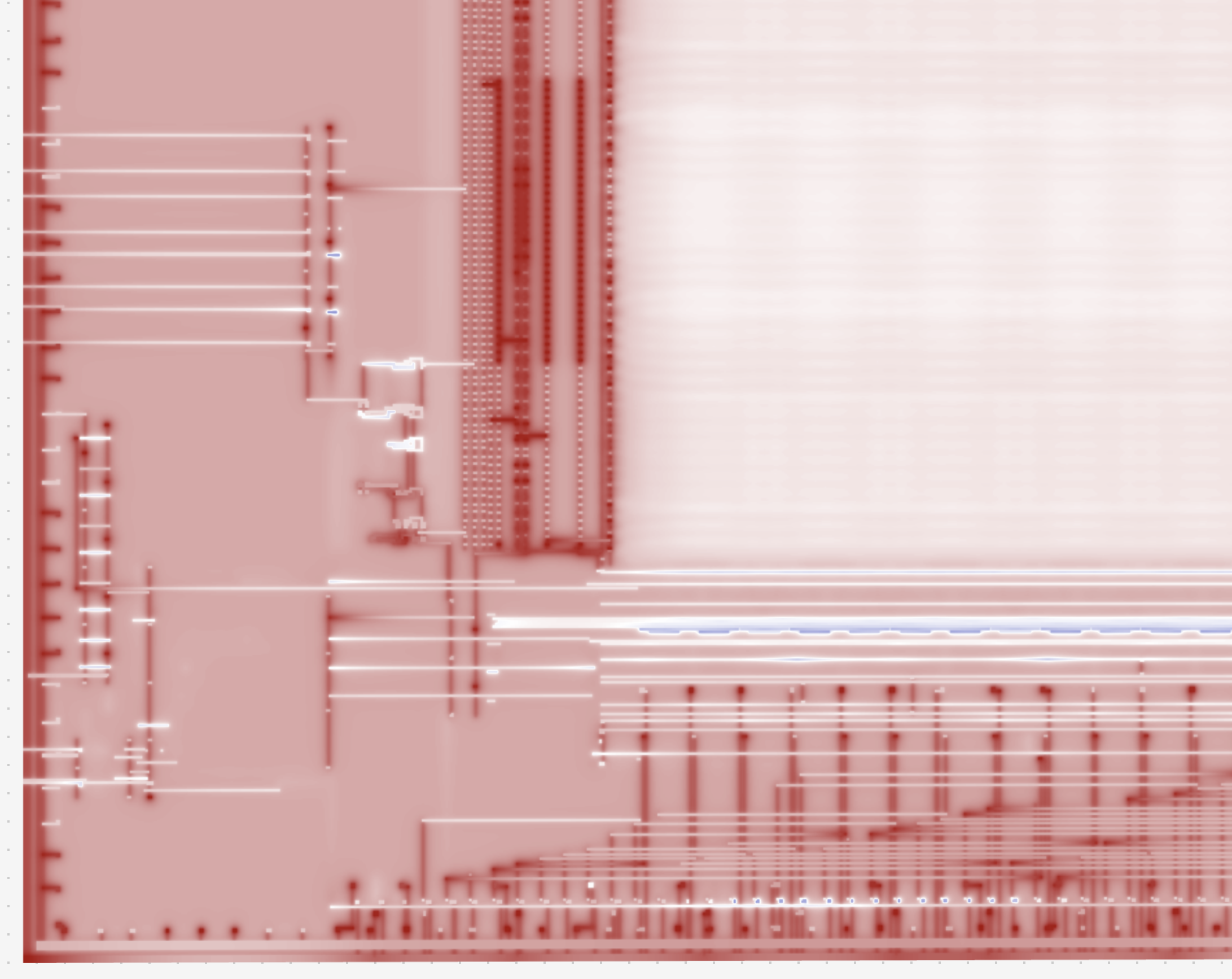
Simulated to Nanometer Sized Features
Thermal analysis stops being a one-off check at the end of the process.
It becomes a reliable, repeatable input into everyday design decisions—at the scale and fidelity modern hardware demands.
Exploring cooling strategies and power-density tradeoffs across full assemblies
Evaluating material stacks, interfaces, and layer configurations under real operating conditions
Identifying hotspots and thermal risk early—before layout and packaging decisions are locked
Running structured design-space exploration and parameter sweeps on real geometry, not proxies
Understanding thermal behavior over time—warm-up, load changes, and operating transients—not just final steady-state conditions
What engineers get
Temperature fields they can trust—both at equilibrium and as conditions evolve over time
Stable results suitable for regression, comparison, and automation
Earlier insight into thermal limits that would otherwise surface late in validation
Fast, deterministic turnaround on full-fidelity designs—without requiring modification or simplification of the original design geometry
Thermo-Mechanical
Vinci provides production-grade thermo-mechanical simulation for complex hardware systems, enabling deterministic prediction of stress, deformation, and global warpage directly from full-fidelity designs.
Rather than approximating mechanical behavior through simplified blocks or rule-of-mixtures models, Vinci operates on real geometry and real material interfaces. Thermal loads, material mismatch, and structural constraints are resolved together—at manufacturing resolution—so mechanical behavior reflects how the product is actually built, assembled, and operated.
Thermo-mechanical physics is solved across scales, from fine-grained material and layout detail to full system assemblies. Results are deterministic and solver-accurate, making them stable enough for comparison, regression, and automated design exploration—without manual setup or tuning.
These capabilities allow engineers to reason about warpage and mechanical reliability earlier in development, when design choices are still flexible and risk can be retired before late-stage validation.
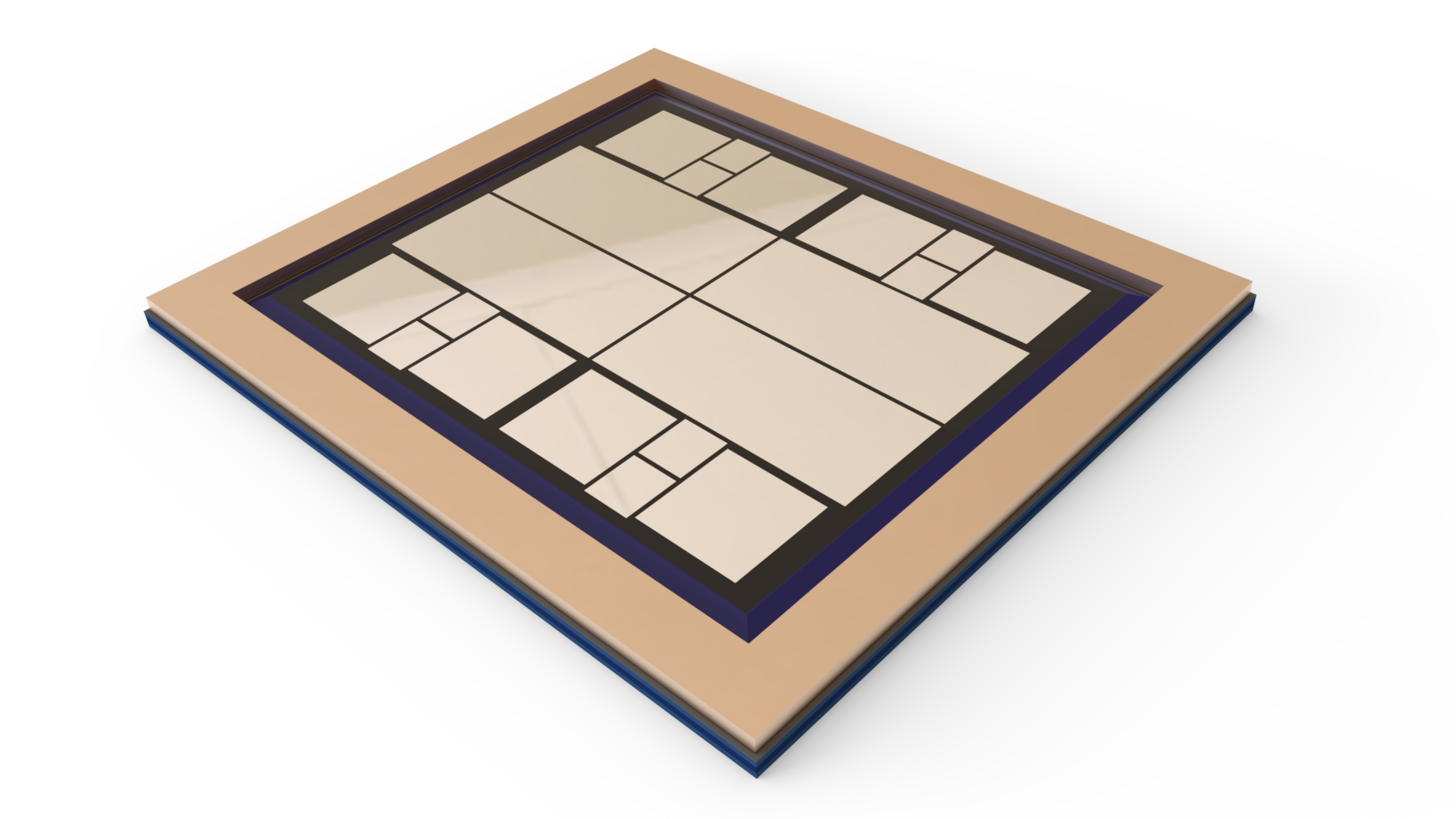
Modular Chiplet Package
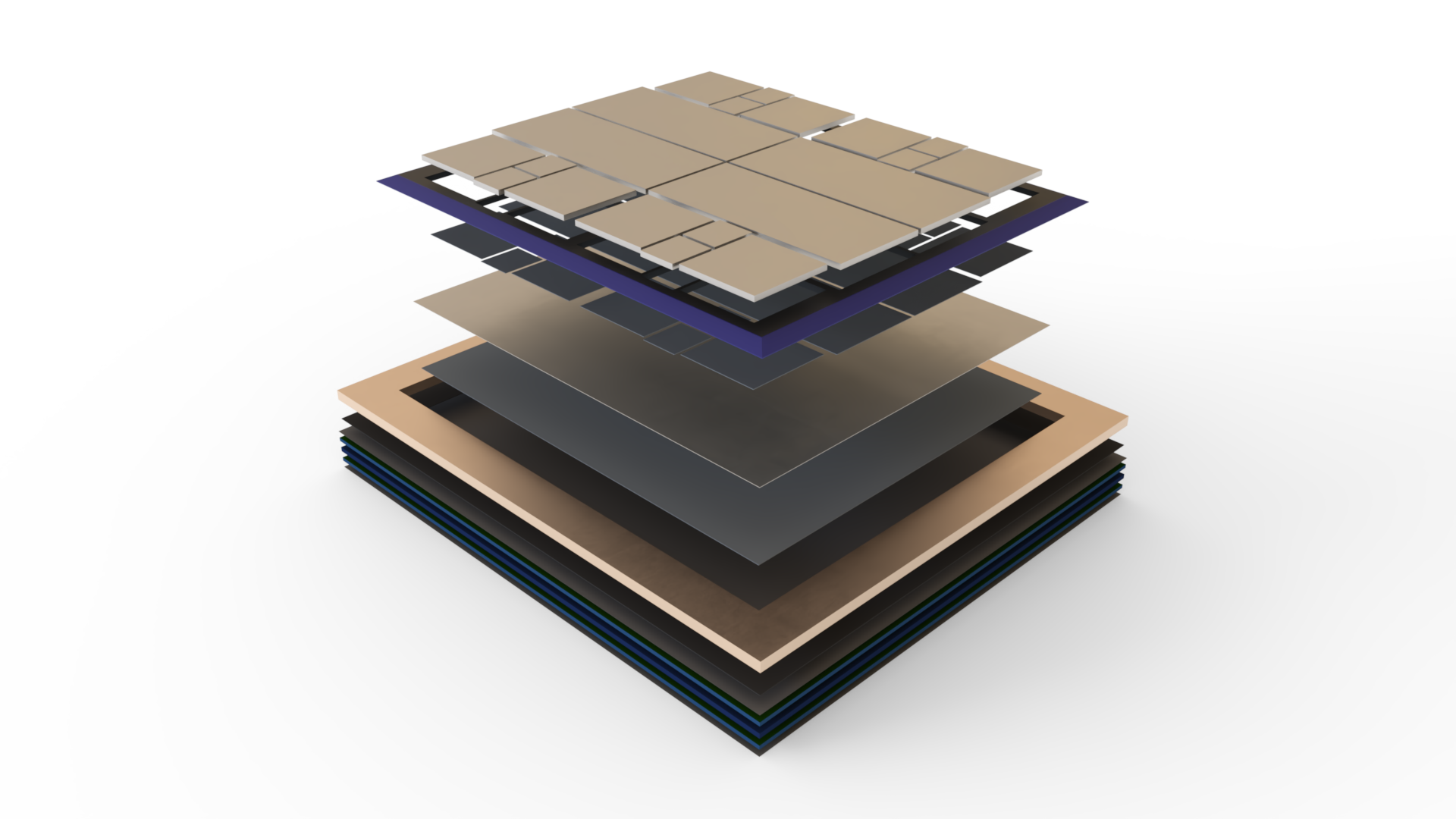
Modular Chiplet Package Exploded View
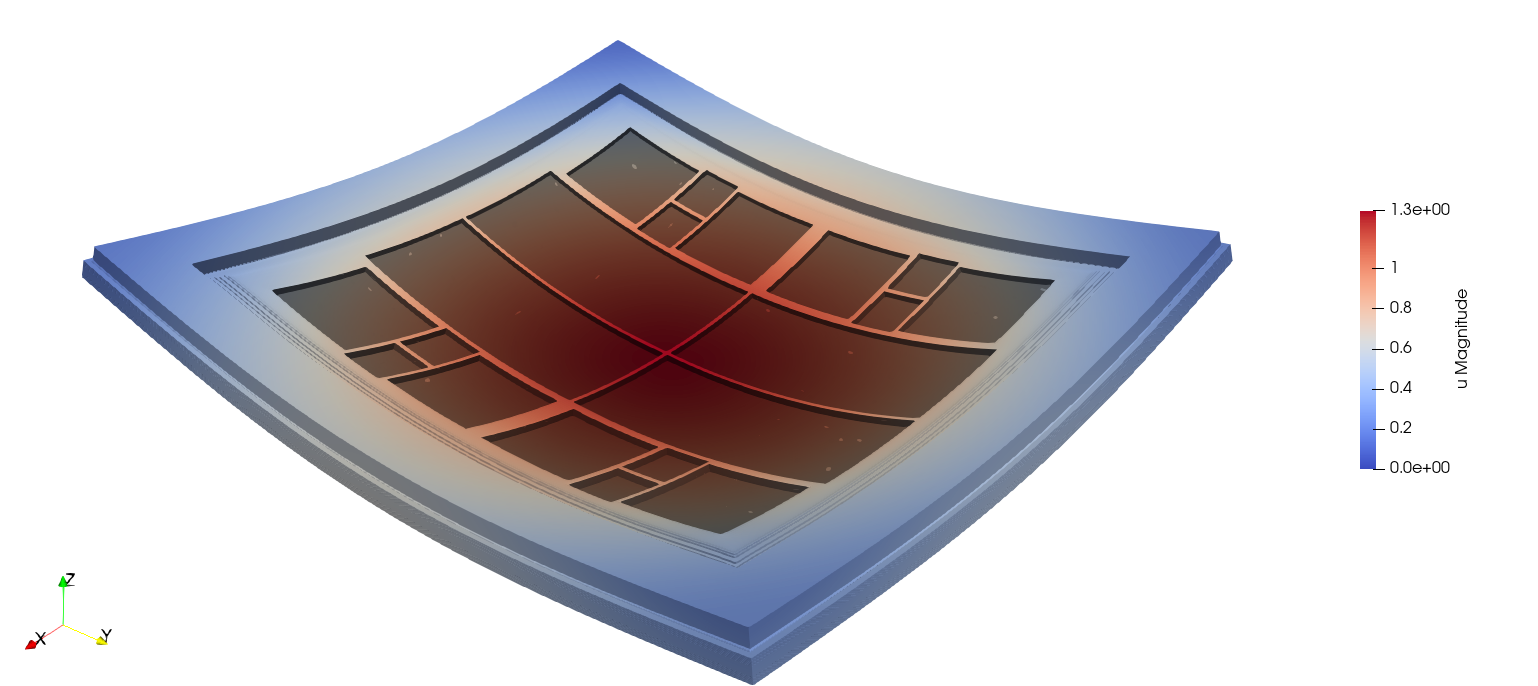
Modular Chiplet Package Displacement at High Temperature Condition
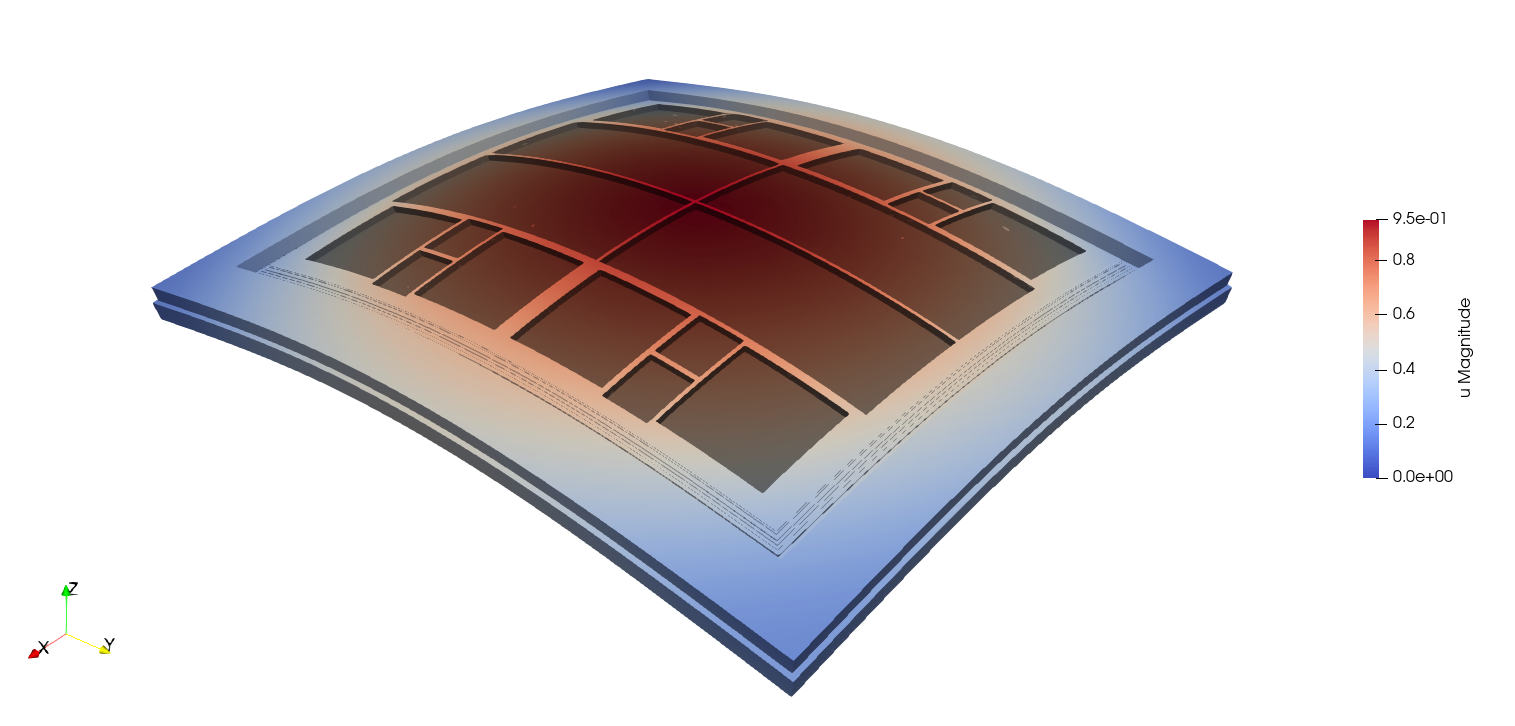
Modular Chiplet Package Displacement at Low Temperature Condition
By playing this video you accept all cookies.
Redistribution Layer Nanometer Sized Features Simulated
Thermo-mechanical analysis stops being a late-stage risk check. It becomes a deterministic, repeatable input into everyday design decisions—so stress, deformation, and warpage can be understood early, compared meaningfully, and signed off with confidence.
Predicting stress and warpage across complex, multi-material assemblies under real thermal loading
Evaluating substrate, stack-up, and material tradeoffs that drive deformation and reliability risk
Understanding how local material behavior and interfaces influence system-level mechanical outcomes
Running repeatable comparisons and design sweeps to mitigate warpage before sign-off
What engineers get
Deterministic predictions of stress, displacement, deformation, and global warpage
Results stable enough for regression, comparison, and production qualification
Earlier visibility into mechanical risk that would otherwise emerge late in validation
Fast resolution of coupled thermal-mechanical effects—so stress, deformation, and global warpage can be evaluated in hours instead of late-stage validation cycles, without simplifying the design
Where Vinci Is Used
Semiconductors are one of the most demanding physical design domains in the world
They combine nanometer-scale features with centimeter-scale assemblies, dense material heterogeneity, tightly coupled thermal and mechanical effects, and strict manufacturing constraints.
Vinci is deployed here first because this is where traditional workflows break hardest—and where correctness, determinism, and trust are contractual requirements, not preferences.
Vinci is used today to:
Analyze thermal and thermo-mechanical behavior across full chip–package–board assemblies
Resolve nanometer- to micron-scale features without requiring geometry simplification
Predict hotspots, stress, and warpage early—before late-stage validation and re-spins
Support production sign-off with deterministic, solver-accurate results
If physics can be reasoned about reliably at this scale and fidelity, it can be reasoned about anywhere.
Natural Extensions(Same Model, Same Guarantees)
The same foundation model and execution system applies directly to other hardware domains where complexity, scale, and risk are rising:
AI accelerators & HPC systems: Power density, cooling strategy, and package-level reliability across large assemblies
Automotive & power electronics: Thermal margin and thermo-mechanical reliability in dense, multi-material systems
Aerospace & defense hardware: Predictable behavior under coupled thermal and mechanical loads, with repeatability required for qualification
Energy & industrial systems: Large-scale assemblies where simplification hides the physics that matter most
These domains differ in application—but not in physical law.
Vinci’s foundation model is built to generalize across any geometry that obeys physics, without retraining, tuning, or per-domain customization.
Semiconductors are not the limit. They are the proof.
+
Join the Webinar
Shift Left on Warpage: Thermo-Mechanical Analysis Before the Design Locks
September 16, 10am PDT
Stop discovering package warpage after your design choices are locked. Join our live demo to see how one semiconductor team cut a 16-hour thermal workflow to about an hour.