
Physics-Accurate Design and Simulation at Manufacturing Resolution
LLMs do language. Vinci does physics.
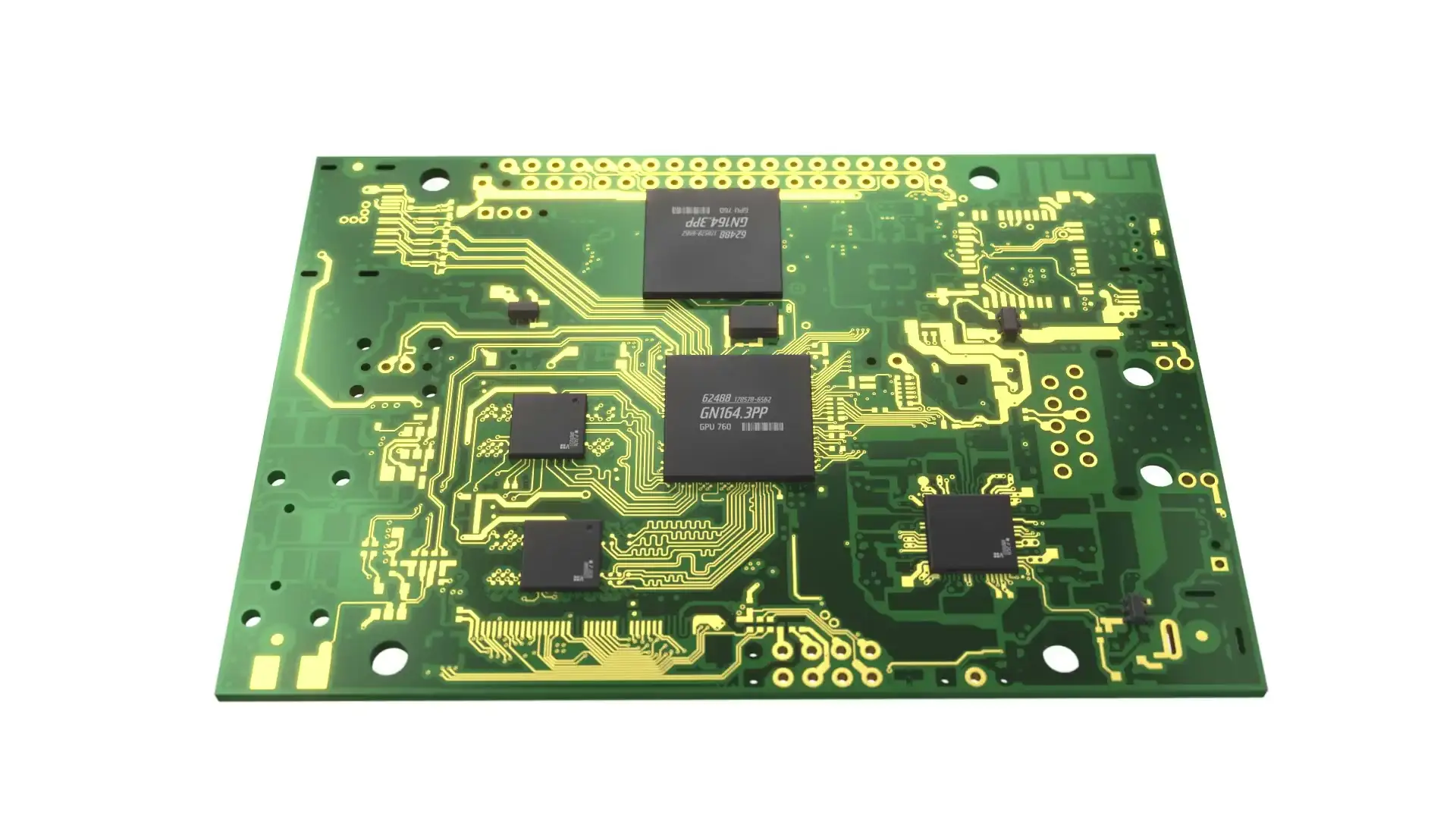
1000x Faster
GPU-powered simulations run in minutes, not days.
Full Resolution
No meshing. No approximations. Vinci’s foundational model operates at design fidelity.
At Any Scale
Accurate down to the nanometer level, Vinci simulates real-world behavior.
Simulation tools haven’t kept pace with modern design complexity

Setup takes hours, compute can take days
Approximations distort results
Physics gets simplified to meet compute limits
Every shortcut widens the gap between design intent and as-built reality
Introducing Vinci
Vinci’s Physics AI foundation model natively understands the governing laws of physical systems. It combines AI acceleration with FEA solver accuracy to deliver full manufacturing-resolution simulations — without approximations.
There’s no meshing, no approximations, and customer data is not required to train the model — it works out of the box.
For the first time, a single engineer can do the work that once required entire teams.
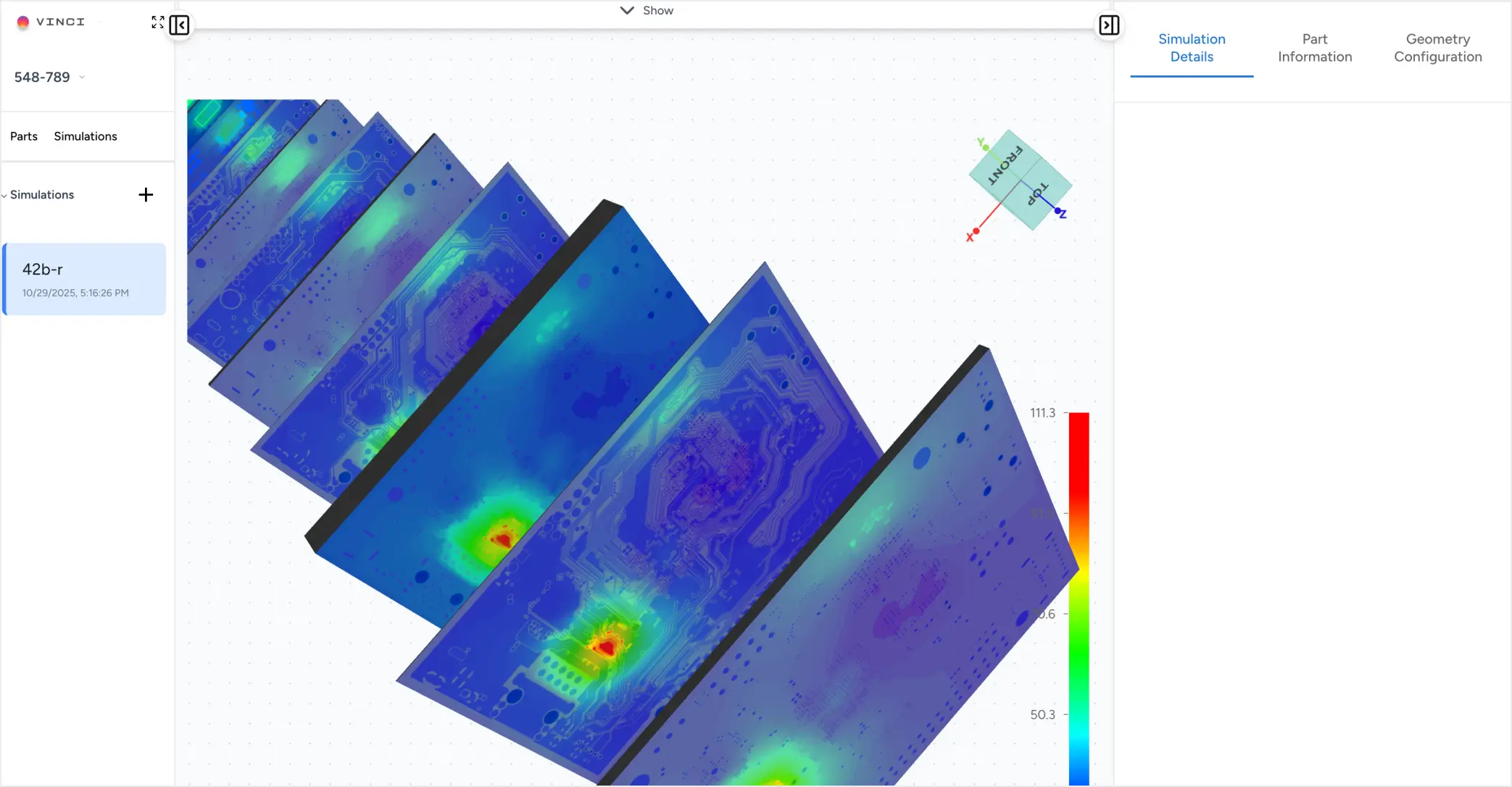







Ingest native files, end to end
Full-fidelity designs preserved
No meshing required
Fully automated simulation
Solver accuracy at 1000× speed
Results
Over half of the top 20 semiconductor companies have benchmarked Vinci against traditional FEA solvers and experimental results — and in every case, the results were confirmed.
In one example, Vinci delivered functionally identical results 360× faster, without setup or meshing overhead
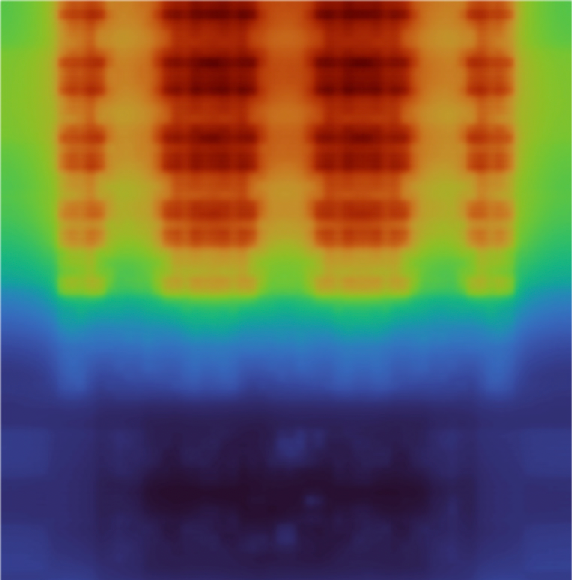
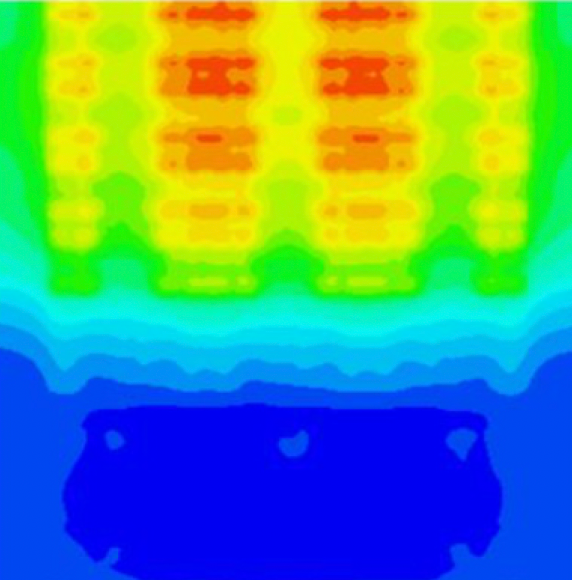
Key Findings
Full fidelity at layout scale
Vinci ingested industry-standard layout files (OASIS/GDS/IPC-2581), resolving layout features smaller than 7 nm in BEOL.
Manufacturing‑scale physics
The study covers a 3D stacked package with ten layers, from nanometer features in BEOL up through the full package.
AI speed with solver-grade accuracy
Vinci-Thermal ran 9,101 simulations with an average of 218 million elements each in 26 hours total runtime (avg 10.29 s ea).
Validation against commercial tools
Full-package thermal predictions were benchmarked against industry-standard commercial solvers, demonstrating very close agreement in hot-spot-to-average temperature ratios and effectively identical temperature-field contours under comparable modeling assumptions.
Accuracy:
<2% Deviation
Runtime:
240x Faster
Complexity:
100+ Million Degrees of Freedom

All fields required. By submitting this form you are agreeing to Vinci4d's Privacy Policy and Terms of Use